
This Riddle Looks Easy… Until You Think Deeper
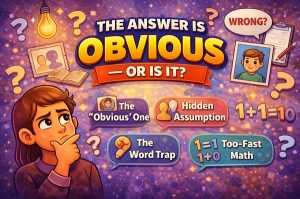
Some riddles don’t challenge you with complexity. They challenge you with confidence. At first glance, this one feels almost too simple—so simple that many people answer without a second thought. That’s exactly why it works.
Before You Try
- Read the riddle slowly, not casually.
- Do not assume extra details that aren’t stated.
- If your answer comes instantly, stop and question it.
The Riddle
Riddle: A man is walking through a field when he suddenly stops, turns around, and walks away. Nothing blocks his path, nothing scares him, and nothing changes around him. Why does he turn back?
Think Deeper
This riddle feels incomplete on purpose. Most people try to invent danger, emotion, or hidden objects. But the key is understanding that the riddle never says the man was lost, afraid, or confused.
The Answer
Answer: He reached the edge of the field.
Why This Riddle Tricks People
The brain expects a dramatic reason: fear, surprise, or danger. Instead, the explanation is neutral and literal. The riddle works because it exploits the habit of overthinking situations that don’t require it.
The Deeper Lesson
Easy-looking riddles often punish rushed thinking. When something feels obvious, we stop analyzing. The smartest solvers do the opposite—they slow down when a problem seems simple.
Try a Similar One
Question: A woman walks into a room, flips a switch, and leaves. Later, dozens of people die. How?
Answer: She was a lighthouse keeper.
What This Tests
- Your ability to separate facts from assumptions
- Your resistance to adding unnecessary story details
- Your patience with simple explanations
Final Thought
If this riddle caught you off guard, that’s the point. The hardest part wasn’t finding the answer—it was realizing you didn’t need to look for something clever. Sometimes, thinking deeper means thinking simpler.





Be First to Comment